
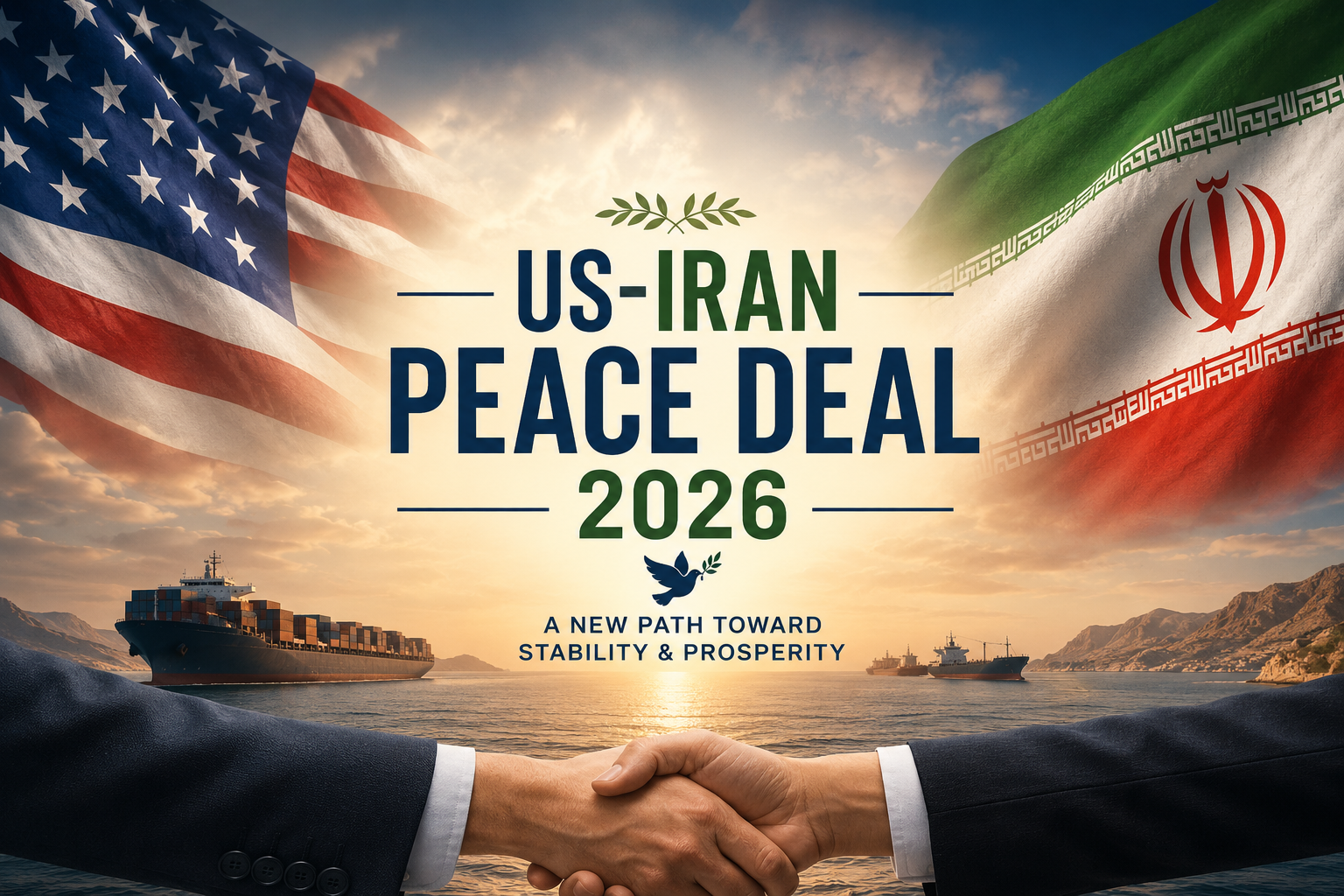
The US-Iran Peace Deal 2026 has emerged as one of the most significant diplomatic developments in recent Middle Eastern history. After months of conflict, escalating tensions, economic disruption, and fears of a broader regional war, Washington and Tehran have agreed to a framework that could reshape relations between the two long-time adversaries. The agreement seeks to extend the existing ceasefire, reopen the strategic Strait of Hormuz, initiate nuclear negotiations, and create a path toward long-term regional stability.
While challenges remain and many details still need to be negotiated, the signing of the memorandum of understanding (MoU) has been welcomed by numerous world leaders as a positive step toward reducing conflict and restoring economic confidence across the region.
Background: Years of Tension Between the United States and Iran
Relations between the United States and Iran have been strained for decades. Disputes over Iran’s nuclear program, economic sanctions, regional influence, and military activities have repeatedly brought the two countries to the brink of direct confrontation.
In 2026, tensions escalated dramatically as conflict spread across parts of the Middle East. Military operations, maritime disruptions, and the closure of key shipping routes created uncertainty in global energy markets. The Strait of Hormuz, one of the world’s most important oil transit routes, became a central point of concern for governments and businesses worldwide.
As the conflict intensified, international mediators including Pakistan, Qatar, and other regional partners worked to facilitate dialogue between Washington and Tehran. Their efforts eventually helped create the foundation for the agreement that has now been signed.
What Is Included in the Deal?
The newly signed memorandum of understanding is not a final peace treaty. Instead, it establishes a framework for negotiations and outlines commitments from both sides during a 60-day period of diplomatic engagement.
Some of the key elements reportedly include:
1. Extension of the Ceasefire
The agreement extends the ceasefire and seeks to prevent further military escalation. Both sides have committed to pursuing diplomatic solutions rather than military confrontation.
2. Reopening the Strait of Hormuz
One of the most significant provisions is the reopening of the Strait of Hormuz for international shipping. The route is critical for global oil transportation, and its closure had contributed to uncertainty in energy markets.
3. Nuclear Negotiations
The deal creates a framework for renewed discussions regarding Iran’s nuclear activities. International inspections and oversight mechanisms are expected to play a major role in future negotiations.
4. Potential Sanctions Relief
The United States has indicated a willingness to discuss sanctions relief if Iran fulfills its commitments under the agreement. Economic incentives are expected to be a key component of future talks.
5. Regional Security Discussions
The agreement also addresses broader regional security concerns, including tensions involving Lebanon and other areas affected by the conflict.
Why the Strait of Hormuz Matters
The Strait of Hormuz is often described as the world’s most important oil chokepoint. A substantial portion of global oil exports passes through this narrow waterway connecting the Persian Gulf to international markets.
Any disruption in the Strait can cause oil prices to surge and create economic instability worldwide. The agreement’s commitment to reopening the route was therefore welcomed by global markets and energy analysts. Reports following the announcement indicated improved investor confidence and declining concerns over potential supply shortages.
For countries that rely heavily on imported energy, including many nations in Asia and Europe, the reopening of the Strait represents a major economic benefit.
Global Reactions to the Agreement
The response from the international community has generally been positive.
European governments, international organizations, and several Middle Eastern nations have expressed support for the agreement, viewing it as an opportunity to reduce violence and encourage diplomatic solutions. A joint statement from numerous world leaders welcomed efforts to pursue peace and stability in the region.
However, not everyone is convinced the agreement will succeed.
Some political leaders and analysts argue that significant differences remain between the United States and Iran. Questions surrounding nuclear verification, sanctions implementation, and regional security arrangements continue to generate debate.
Israel has also expressed concerns regarding aspects of the agreement and has indicated that it will continue to prioritize its own security interests regardless of the ongoing negotiations.
Economic Impact of the Deal
Beyond politics and security, the agreement could have substantial economic consequences.
Stabilizing Energy Markets
Energy traders closely monitor developments in the Persian Gulf because disruptions can affect global oil prices. The reopening of shipping lanes and reduced risk of conflict may help stabilize energy markets and lower transportation costs.
Opportunities for Iran’s Economy
Iran has faced years of economic pressure due to international sanctions. If future negotiations lead to sanctions relief, the country could experience increased investment, expanded trade opportunities, and greater access to global financial systems.
Benefits for Global Trade
The agreement may also improve confidence in international trade routes across the Middle East, benefiting shipping companies, importers, exporters, and consumers worldwide.
Challenges Ahead
Despite the optimism surrounding the announcement, the path forward remains uncertain.
The memorandum of understanding only establishes a framework for future negotiations. Many difficult issues still need to be resolved, including:
- The future of Iran’s enriched uranium stockpile.
- Verification and inspection procedures.
- The timing and scope of sanctions relief.
- Regional security concerns involving neighboring countries.
- Long-term guarantees that both sides will honor their commitments.
Diplomatic agreements between the United States and Iran have historically faced significant obstacles. Previous efforts have often struggled due to political opposition, changing leadership priorities, and disagreements over implementation.
As a result, many experts caution that the coming weeks will be critical in determining whether the current momentum can be transformed into a lasting peace arrangement.
Conclusion
The US-Iran Peace Deal 2026 represents a major diplomatic breakthrough after years of hostility and months of intensified conflict. By extending the ceasefire, reopening the Strait of Hormuz, launching nuclear negotiations, and creating a framework for future cooperation, the agreement offers hope for greater stability in one of the world’s most volatile regions.
However, the success of the deal will ultimately depend on the willingness of both sides to follow through on their commitments and overcome longstanding differences. If negotiations progress successfully, the agreement could mark the beginning of a new chapter in US-Iran relations and contribute to a more stable Middle East. If not, the region could once again face uncertainty and renewed tensions.
For now, the world is watching closely as the next phase of negotiations begins.