
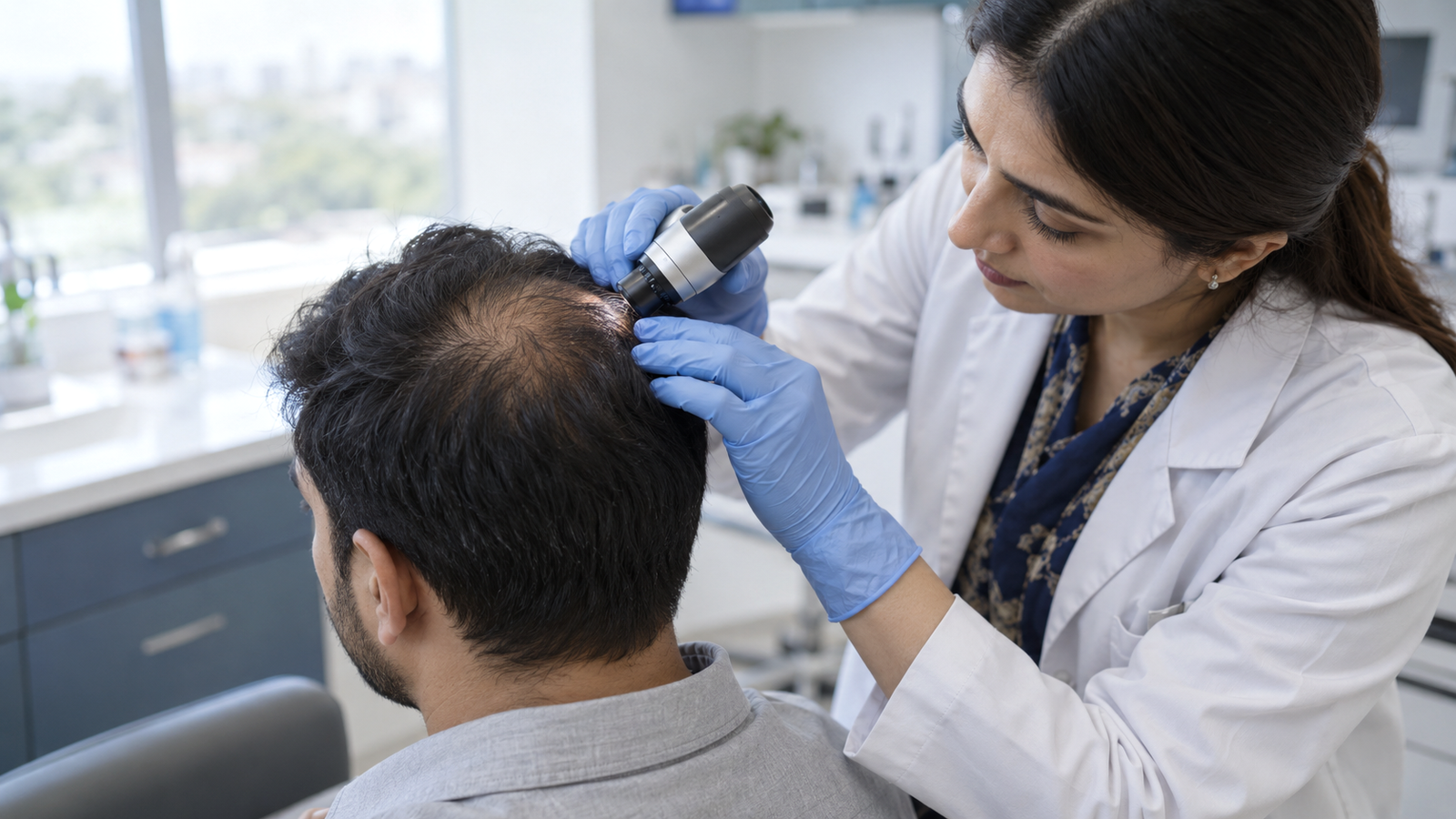
Hair thinning can make an expensive treatment sound worth trying especially when a clinic promises thicker hair with fewer sessions. Exosome therapy is one of the newer options attracting attention in Pakistan.
But how reliable is it? Can it damage your health? And is it better than PRP?
Exosome hair treatment shows promise, but its effectiveness and long-term safety are not yet established well enough to treat it as a guaranteed solution.
What Is Exosome Hair Treatment?
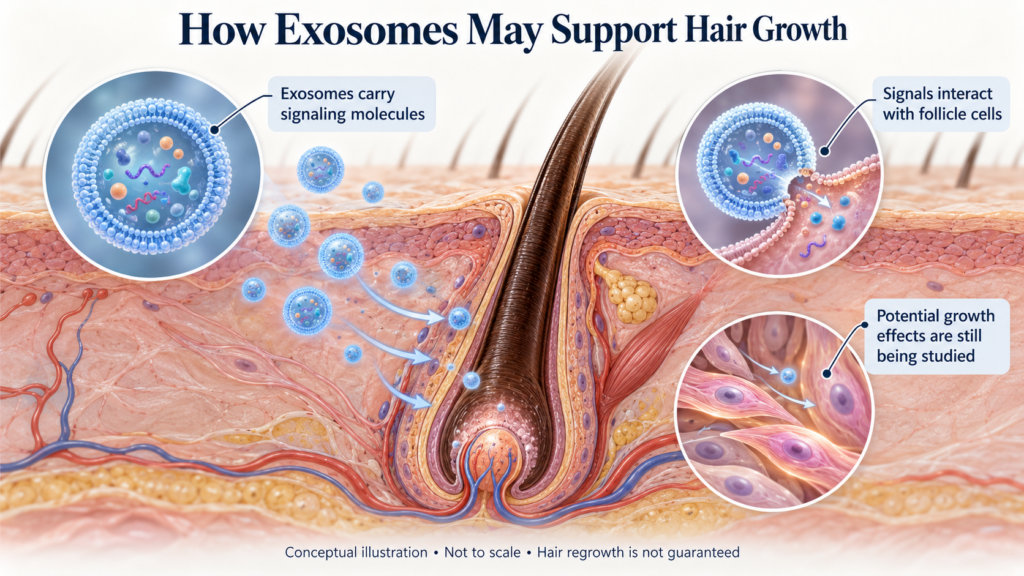
Exosomes are tiny particles released by cells. They carry proteins and other biological signals that influence how cells behave. Researchers are investigating whether these signals can support hair growth.
During treatment, a clinic typically injects an exosome preparation into the scalp or applies it alongside microneedling. Exosomes are not living stem cells, even though some products are derived from cells grown in a laboratory.
An important limitation is that “exosome treatment” does not describe one standardized product. Preparations differ in their source, contents, processing, and method of delivery. Results from one preparation cannot automatically be applied to another.
Does It Actually Regrow Hair?
Early findings are encouraging. A 2025 systematic review identified 11 clinical studies, including two randomized trials. The studies reported improvements in measures such as hair density or thickness.
However, the evidence had important limitations: small patient groups, different treatment methods, and limited follow-up. Larger, better-controlled studies are needed to establish who benefits, how much improvement to expect, and how long results last. Claims of permanent recovery or guaranteed results after one session go beyond the available evidence.
Does “Experimental” Mean It Is Dangerous?
Experimental does not mean a treatment will necessarily cause harm. It means there are unanswered questions about its benefits and risks.
Small hair-treatment studies mainly reported temporary effects such as redness, itching, swelling, and discomfort. Their size and duration, however, cannot rule out uncommon complications or problems that appear later.
Published reports involving cosmetic exosome injections have described persistent inflammatory reactions, scarring, and tissue damage. Some involved facial skin rather than the scalp, so they do not tell us how frequently these complications occur during hair treatment. They do show why injectable products require careful safety evaluation.
The US FDA also states that there are no FDA-approved exosome products and has warned about serious adverse events involving unapproved preparations. This does not establish a product’s regulatory status in Pakistan, but a claim that an exosome product is “FDA-approved” should be questioned.
Exosomes vs. PRP: What Is the Difference?
| Question | Hair PRP | Exosome treatment |
| What is used? | Platelet-rich plasma prepared from your own blood | A manufactured preparation containing cell-derived particles |
| How is it administered? | Injections into the scalp | Usually injections or application with microneedling |
| How established is it? | More established clinical use and evidence, with variable results | Emerging evidence with substantial uncertainty |
| Are repeat sessions needed? | Usually; maintenance helps preserve results | The best schedule and maintenance requirements remain unclear |
| Is it a permanent cure? | No | Permanent results have not been established |
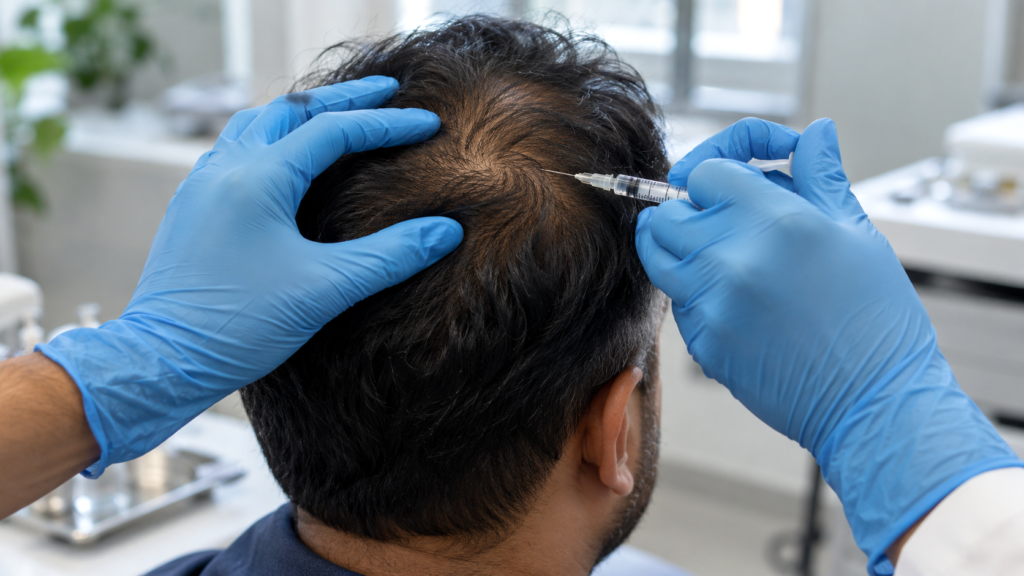
The American Academy of Dermatology describes PRP as an option that may reduce hair loss and improve thickness. A commonly used schedule involves monthly sessions for three months, followed by maintenance every three to six months. Individual treatment plans vary.
What Do Patient Reviews Say?
Online experiences vary. One RealSelf reviewer reported less shedding and improved growth after a combined PRP/exosome treatment. A Reddit commenter described temporary thickening after multiple combined-treatment sessions, with improvement disappearing after treatment stopped.
These are personal reports, not verified clinical outcomes. Because both involved multiple treatments, neither establishes what exosomes contributed. Reviews can help people understand the experience of attending a clinic, but they cannot provide a reliable success rate.
How Much Does It Cost in Pakistan?
Advertised prices checked in October 2026, mainly from Islamabad and Rawalpindi clinics, suggest:
| Treatment | Advertised price per session |
| Hair PRP | Approximately Rs 10,000–25,000 |
| Exosome hair treatment | Approximately Rs 35,000–130,000 |
| Some premium exosome offerings | Above Rs 150,000 |
These are clinic advertisements, not independently verified quotations or endorsements. Product choice, quantity, additional procedures, and follow-up can change the total cost.
What Should You Consider Before Booking?
Start with a dermatologist’s diagnosis. Genetic thinning, temporary shedding, and scalp disease may require different approaches. Established options for appropriate patients include minoxidil and prescription finasteride; their benefits, side effects, and ongoing treatment requirements should be discussed with a clinician.
For someone deciding where to spend their money, the cautious choice is to prioritize diagnosis and established treatments. Exosomes may eventually have a clearer role in hair restoration, but current uncertainty makes them an experimental option best considered within a properly regulated clinical study.
This article provides general information and does not replace an individual assessment by a qualified dermatologist.